
 CrowdStrike
 Palo Alto Networks
Introduction
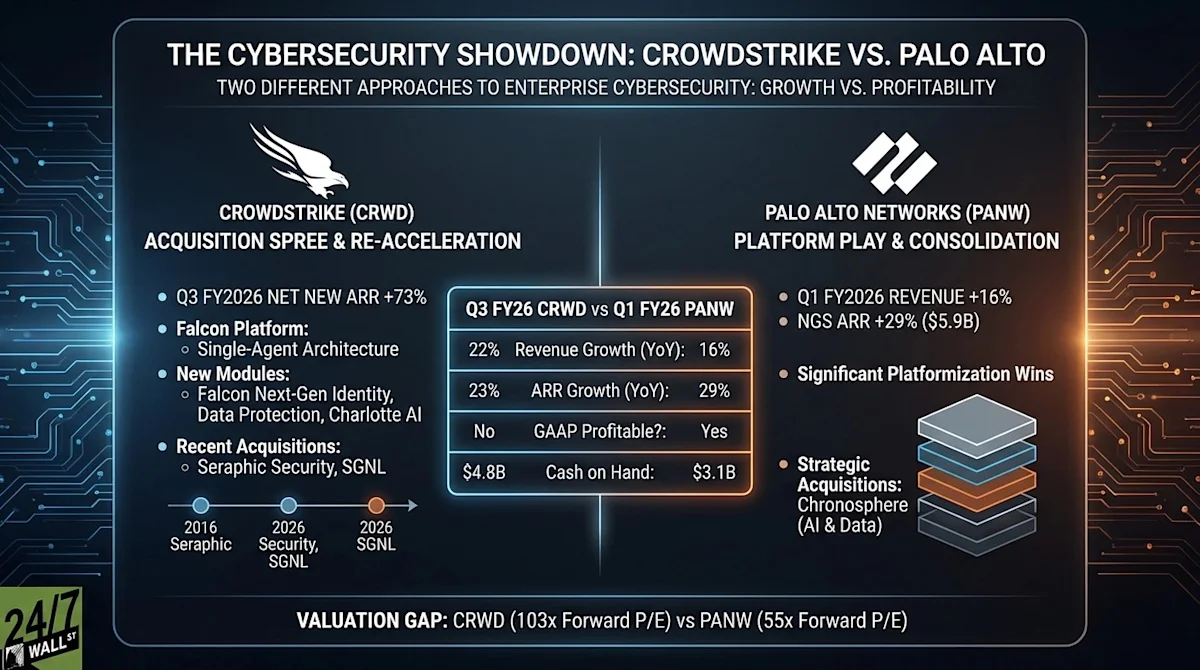
Their focus is clear: stop breaches and catch tricky threats before they escalate. CrowdStrike or Palo Alto Networks? It’s a tough call for businesses choosing their endpoint and network defense. Both platforms maintain solid reputations in the security market.
Its agent runs so light that devices keep humming without a hiccup. CrowdStrike stands out with a cloud-first approach to endpoint detection and response. AI-driven behavior analytics flag suspicious activity creeping around user devices. When an attack hits, teams can isolate the infected machine fast—quarantining threats without shutting down entire systems.
Palo Alto Networks casts a wider net. The goal: smooth coverage from user endpoints all the way to the cloud core. Their Cortex XDR platform blends endpoint protection with network traffic monitoring and cloud defenses. It scans for issues across devices and cloud infrastructure alike. Combining automated alerts and manual analysis, it is recognized for its detailed network reach, firewall mesh capabilities, and effective threat blocking.
CrowdStrike appeals to organizations needing rapid endpoint fixes and flexible cloud scaling. These distinctions become clear when you dig into features and usability. Palo Alto serves firms craving detailed network insight and multi-layered security. Pricing is labyrinthine—both vendors offer tiers custom for startups up to large enterprises, but costs and included features swing wildly depending on scale.
- CrowdStrike’s core advantage lies in cloud-native endpoint defense, boosted by AI threat detection.
- Palo Alto Networks integrates endpoint and network security through Cortex XDR’s unified platform.
- Pricing, user experience, and scalability vary enough that company needs heavily influence the top choice.
This guide slices through vendor hype, delivering clear, fact-driven insights on endpoint and network defense battles as we move toward 2026. Putting all these points together reveals which platform aligns best with a firm’s security goals and budget.
CrowdStrike Software Features and Deployment Analysis
- CrowdStrike — CrowdStrike has a 4.7-star rating on Gartner Peer Insights based on 52 reviews, higher than comparable peers.
- Palo Alto Networks — Palo Alto Networks holds a 4.4-star rating on Gartner Peer Insights based on 39 user reviews
CrowdStrike Software Features and Deployment Analysis
That figure sets a steep financial hurdle. CrowdStrike’s starting price for SMB plans lands near $137,000. Only larger mid-market firms with substantial cybersecurity demands typically meet that bar. But at that price, smaller businesses rarely fit the bill.

They don’t share detailed breakdowns. Unlike rivals such as Palo Alto Networks, CrowdStrike holds its pricing close. Buyers often end up guessing what the actual costs will reach. Palo Alto, by contrast, uses a tiered model. It’s still expensive, yes, but at least more transparent. Meanwhile, CrowdStrike’s stock tells a different tale: a forward P/E ratio north of 90 suggests investors bet on rapid growth. But that spike also flags improved risk—especially if you’re weighing investment options. Taken together, CrowdStrike aims squarely at large enterprises equipped with substantial security budgets, rather than smaller organizations watching every expense.
CrowdStrike’s standout edge is its AI-driven threat protection. It brings advanced defenses paired with real-time response capabilities that expert users demand. The price tag fits buyers who want to invest deeply in proactive security, using rich analytics and a broad market of integrations that cheaper plans can’t offer. This setup gels perfectly with large, security-first organizations. Yet it excludes many smaller or budget-tight companies. The choice is stark: top-tier tech or affordability.
| ✓ Pros | ✗ Cons |
|---|---|
| CrowdStrike has a 4.7-star rating on Gartner Peer Insights based on 52 reviews, higher than comparable peers. | The high price floor starting at $136,786 for SMB plans may be prohibitive for smaller organizations. |
| Priced at an average of $136,786 for SMB plans, CrowdStrike targets mid-market organizations with strong cybersecurity. | Enterprise pricing averaging $303,348 positions CrowdStrike as a costly option compared to some competitors. |
| CrowdStrike trades at a 93.19x NTM P/E ratio, reflecting high market growth expectations for its AI-driven platform. | CrowdStrike’s premium valuation with a 93.19x NTM P/E indicates improved investment risk relative to industry norms. |
Palo Alto Networks Software Capabilities and Cortex XDR Review
Palo Alto Networks targets big businesses with its security tools. Its strong user ratings on Gartner Peer Insights come from a large pool of reviews. Investors value the stock fairly, but some hesitate because growth seems slower compared to faster-moving competitors.
It leans on strong endpoint detection and clear pricing that fits small to mid-sized companies. CrowdStrike takes a different path. Palo Alto Networks, instead, bundles its tools into a vast market. That system costs more, putting it out of reach for smaller teams. In the past, its endpoint tools often spit out too many alerts, making security teams’ jobs harder. Lately, upgrades have smoothed some of those rough spots. Overall, Palo Alto Networks suits bigger enterprises with sharp security teams that need heaps of data and automated reaction plans (for the most part). Smaller, cost-conscious groups usually don’t fit.
This platform pulls data from devices, networks, and clouds to sharpen threat spotting and trigger automated responses. What really sets Palo Alto Networks apart is Cortex XDR. Its complexity demands a bigger budget and skilled staff to run forensic-level investigations. Smaller firms often find it overwhelming and pricey, so they tend to skip it. The typical buyer has in-house experts who can tap all its features and keep risks tightly controlled.
Palo Alto Networks pricing and market positioning
You won’t find easy-to-understand price lists online. Pricing here targets enterprises that want depth and connection over simple costs. Smaller groups must haggle directly for licenses and bundles. Competitors often lay out tiered pricing aimed at smaller setups. Palo Alto Networks serves as a durable security base for large firms where the high cost matches the big risks they face and their need for nonstop, automated threat info. Analysts say that despite pricier per-endpoint fees, clients gain sharper situation views and smoother operations. The payoff is clear. This strategy pins Palo Alto Networks as a premium brand built for tough, enterprise-level security challenges—not for bargain hunting or easy installs.
| ✓ Pros | ✗ Cons |
|---|---|
| Palo Alto Networks holds a 4.4-star rating on Gartner Peer Insights based on 39 user reviews | Market valuation at $168 per share may reflect perceived underperformance compared to faster-growing peers |
| PANW stock price is $168, indicating market valuation context against competitors | Some users highlight a volume of low-context alerts generated by EDR tools before recent Cortex XDR improvements |
| Integrates advanced detection and response capabilities custom for enterprise-grade environments | Average pricing for Palo Alto Networks generally ranks higher than some competitors, limiting SMB accessibility |
Detailed Feature Comparison of CrowdStrike and Palo Alto Networks
Palo Alto Networks casts a wider net, excelling especially in firewall tech and mixing in threat intelligence at the network level (by and large). CrowdStrike emphasizes AI-driven endpoint detection and response deeply integrated within a cloud-native framework, honing its strength in threat hunting. That means faster, clearer views of dangers across many devices.
CrowdStrike flexes easily in the cloud, managing tens of thousands of endpoints without breaking a sweat. Palo Alto leans on a mix of hardware and cloud, built for sprawling setups that need heavy lifting on-premises. So CrowdStrike fits cloud-first firms, while Palo Alto gears toward hybrid setups juggling both worlds.
Cloud support tells another tale. CrowdStrike’s platform was born in the cloud—updates hit instantly, and latency stays low. Palo Alto works cloud into the mix via its Prisma Cloud products, stitched alongside firewalls and endpoint tools. That combo adds complexity—you’re maintaining more moving parts.
Integration styles also part ways. CrowdStrike opens its API doors wide, letting you plug into countless SIEMs, SOARs, and ticketing systems easily. Palo Alto leans on built-in connections within its own market—good if you’re all-in on their gear but trickier when mixing vendors.
CrowdStrike keeps it simple: clear subscription tiers with options for SMBs and big enterprises alike. Pricing confirms these strategic paths. Palo Alto’s costs hide behind custom deals and bundles custom case by case. CrowdStrike offers round-the-clock support plus in-depth online guides. Palo Alto sets tiered enterprise support, matching it to customer size and need.
Palo Alto Networks Software Capabilities and Cortex XDR Review

CrowdStrike’s cloud-first approach appeals to industries with tight data laws and audits. Both check major compliance boxes like GDPR, HIPAA, and SOC 2. Palo Alto spreads compliance across hardware and cloud tools, suiting businesses operating in multiple regions.
| Feature Category | CrowdStrike | Palo Alto Networks |
|---|---|---|
| Threat Detection | AI-driven EDR with behavioral analysis | Network-focused detection + firewall intelligence |
| Scalability | Cloud-native, elastic endpoint scaling | Hardware-software combined for large infra |
| Cloud Support | Fully cloud-native with real-time updates | Hybrid cloud offerings via Prisma Cloud |
| Integration | Open APIs, broad third-party compatibility | Native integration within vendor market |
| Pricing | Transparent subscription tiers with SMB options | Custom pricing, often bundled enterprise plans |
| Customer Support | 24/7, complete self-help and live support | Tiered enterprise support with SLA options |
| Compliance Standards | GDPR, HIPAA, SOC 2, cloud-first compliance | GDPR, HIPAA, SOC 2, multi-regional support |
Palo Alto Networks fits those who want sprawling network security under one vendor’s roof. This side-by-side pulls the contrast into focus: CrowdStrike targets teams chasing speed in cyber defense and cloud smoothness. Endpoint nimbleness versus integrated infrastructure control—that’s the core trade-off, shaped heavily by where you run and how big you grow (at least usually).
CrowdStrike scores high on EDR ease-of-use. Gartner Peer Insights backs this up. Palo Alto shines in firewall strength and threat intel blending. Real-world use cases show the gap clearly (roughly). Firms need to balance cloud speed against network breadth, all while keeping an eye on budgets and shifting threats.
Choosing the Right Cybersecurity Solution for Your Business
The answer depends on which features fit your company best. CrowdStrike or Palo Alto Networks? CrowdStrike stands out in endpoint detection and response. It’s especially strong in big, fast-moving environments. Its AI-driven threat hunting tools help security teams spot issues early and jump on them immediately. Users like CrowdStrike’s lightweight agent. It installs fast. IT teams appreciate that quick rollout and the flexibility it offers, without giving up coverage. They’re clear and upfront for both small businesses and enterprises. When money’s tight but threat intel can’t slip, that transparency counts.
Big companies with complex setups often lean this way. Palo Alto Networks plays a different role—it focuses on tight network security wrapped in its Cortex XDR platform. Gartner Peer Insights highlight many customers who rely on Palo Alto’s powerful deep packet inspection and firewall features. These tools fit groups needing to guard the network edge while also watching endpoints. Usually, you need a custom quote. Small businesses or those wanting quick, clear costs might find this frustrating.
Here’s when one pulls ahead:
- Cloud-native teams and remote workers often choose CrowdStrike. Its cloud-first design and nonstop endpoint scans stay ahead of threats without slowing people down.
- Companies with hybrid environments wanting tight firewalls and network control usually pick Palo Alto Networks. It clicks well if you’re already using their firewalls, making management smoother.
- If clear prices and easy scaling matter, CrowdStrike wins. Its clear plans cut surprise bills and make buying and budgeting easier as you grow.
- Firms craving fine traffic control and strong links to third-party network tools tend to lean Palo Alto, even if that means paying more.
CrowdStrike’s simple interface earns steady praise, shrinking ramp-up time for teams. User reviews offer a sharp contrast, too. In comparison, Palo Alto’s Cortex tools demand more specialist skills to get full value. Both are reliable, but CrowdStrike’s agent setup avoids the extra weight some network tools add.
CrowdStrike usually wins for fast, flexible endpoint defense that balances cost with power. At last, it all boils down to what your business values and what resources you have. Palo Alto Networks fits better when you need elite network defense, deep traffic control, and can afford top pricing.
Growing remote teams often favor CrowdStrike’s modular design. Meanwhile, sprawling enterprises with complex on-premises setups like Palo Alto’s broad, battle-tested security suite. Both stand at the summit—but picking right means matching their tech and price to how you really work every day.
Common Concerns and Key Clarifications
Understanding the Pricing Structures
CrowdStrike breaks its pricing into two main categories: SMB and Enterprise. CrowdStrike and Palo Alto Networks both rely on tiered pricing models custom to different business sizes and requirements. SMB plans start around $59 per month per endpoint. Enterprise options climb majorly, depending on features and the number of endpoints involved. On the other hand, Palo Alto Networks charges a premium, reflecting its extensive feature set designed for large organizations. For smaller companies, CrowdStrike’s pricing tends to be more straightforward. Large buyers might justify Palo Alto’s cost with its complete suite. Pricing clarity isn’t just a perk; it directly shapes budgeting decisions.
Key Differences in Deployment and Management
This approach simplifies updates and scales effortlessly without weighing down IT teams. CrowdStrike primarily employs lightweight agents that integrate smoothly with cloud-native infrastructures. Palo Alto Networks often demands more complex on-premises setups, though it also includes cloud-managed components. Companies aiming for rapid expansion with minimal infrastructure hassle tend to opt for CrowdStrike. Those focus oning a unified firewall and endpoint security solution may prefer Palo Alto Networks. Deployment strategy majorly affects both overall expenses and operational flexibility. It matters greatly.
Performance and Detection Capabilities
CrowdStrike focuses on AI-driven threat detection, pairing rapid threat hunting that adapts continuously with machine learning algorithms tracking subtle behavioral changes. Ultimately, your choice hinges on whether you focus on fast, pinpoint detection or detailed, complete threat context—that depends entirely on your security objectives. Independent testers like Gartner and AV-TEST consistently rank its speed and accuracy near the top. In contrast, Palo Alto Networks uses its Cortex XDR platform to provide deep reach by fusing endpoint and network data, offering a broader threat perspective. However, this layering can slow alert times.
Support, Training, and Customer Experience
Both vendors supply strong support tiers. Vendor support quality during onboarding and daily use profoundly influences how effective your security team can be. CrowdStrike’s user interface typically feels more intuitive to administrators new to endpoint detection, easing adoption. Palo Alto Networks presents a steeper learning curve owing to its expansive capabilities and integration demands. CrowdStrike combines online training modules with live assistance and often assigns dedicated account managers to enterprise clients.
Integration and Market Compatibility
CrowdStrike integrates smoothly with leading SIEM platforms and provides APIs to build custom alerts and automation rapidly. That decision will dictate how your security operations can scale and evolve over time. Palo Alto Networks extends beyond endpoints into a full-spectrum security market, encompassing firewalls, cloud security, and threat intelligence feeds. This suits organizations seeking a single framework for unified network and device protection. The question is whether your team prefers a lean endpoint-focused system or a wide-ranging, multi-layered defense.