
The Role of Automation in Microservices API Testing

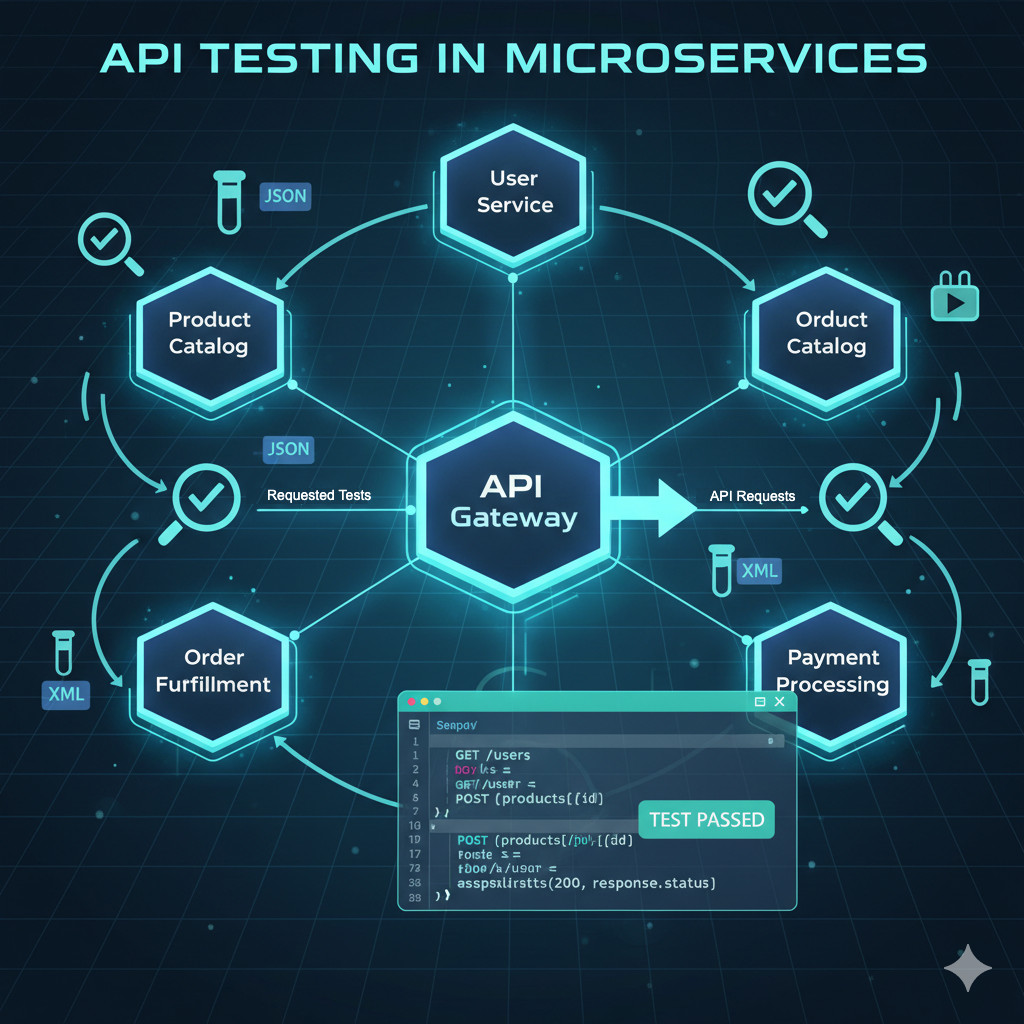
This world needs fast, exact checks to catch bugs early before they cause trouble. Software gets tricky when it breaks apart from a monolith into microservices—lots of small, loosely connected services chatting through APIs. Automated API testing tools jump in here. Repeated API calls are executed automatically to verify data accuracy and simulate real-world scenarios without human oversight.
This change isn’t just about quicker tests. It’s about handling messy dependencies and nonstop updates. Relying on manual testing for a complex array of services slows progress and overlooks subtle edge cases. Automation ensures consistent test coverage and can expand easily as teams deploy numerous microservices concurrently. These tools test each API on its own but also check how they work together in the bigger system.
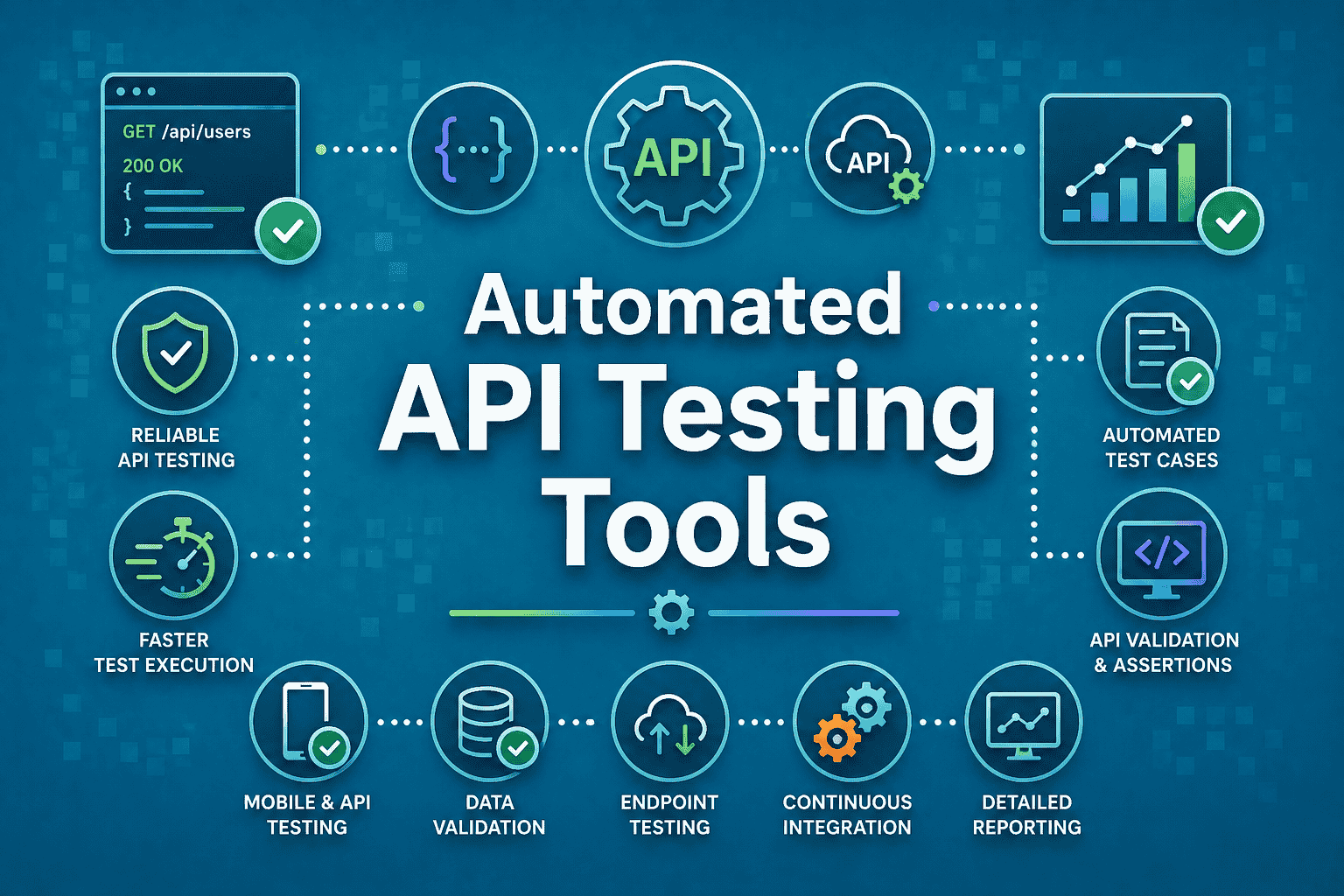
API testing tools cover several technical angles: functional testing makes sure services answer right; load testing pushes hard by simulating many users at once; security testing digs for weak spots in API endpoints. More microservices mean more test points. Handling complex workflows, message queues, and service inventories efficiently and safely is a key challenge for automation.
Key benefits include:
- Speedier releases by cutting hours spent preparing and running manual tests
- Better reliability as automated suites run inside continuous integration pipelines and catch failures immediately
- Broader coverage with flexible, reusable tests handling API paths, data formats, and error cases
- Safer runs with less chance for human slip-ups when checking tangled message chains and login steps
Without this, teams rely on fragile manual tests that can’t keep pace with code updates, risking slow releases or bugs reaching users.
Overview and Features of Postman for API Testing
Cloud-native apps push this need further. Microservices spin up and down, change routes, and scale fast in containers. Automated tools track container orchestration, discover endpoints on the fly, and adjust as the infrastructure moves. Picking the right tool means thinking about protocol support, scripting ease, DevOps pipeline hooks, and clear reports.
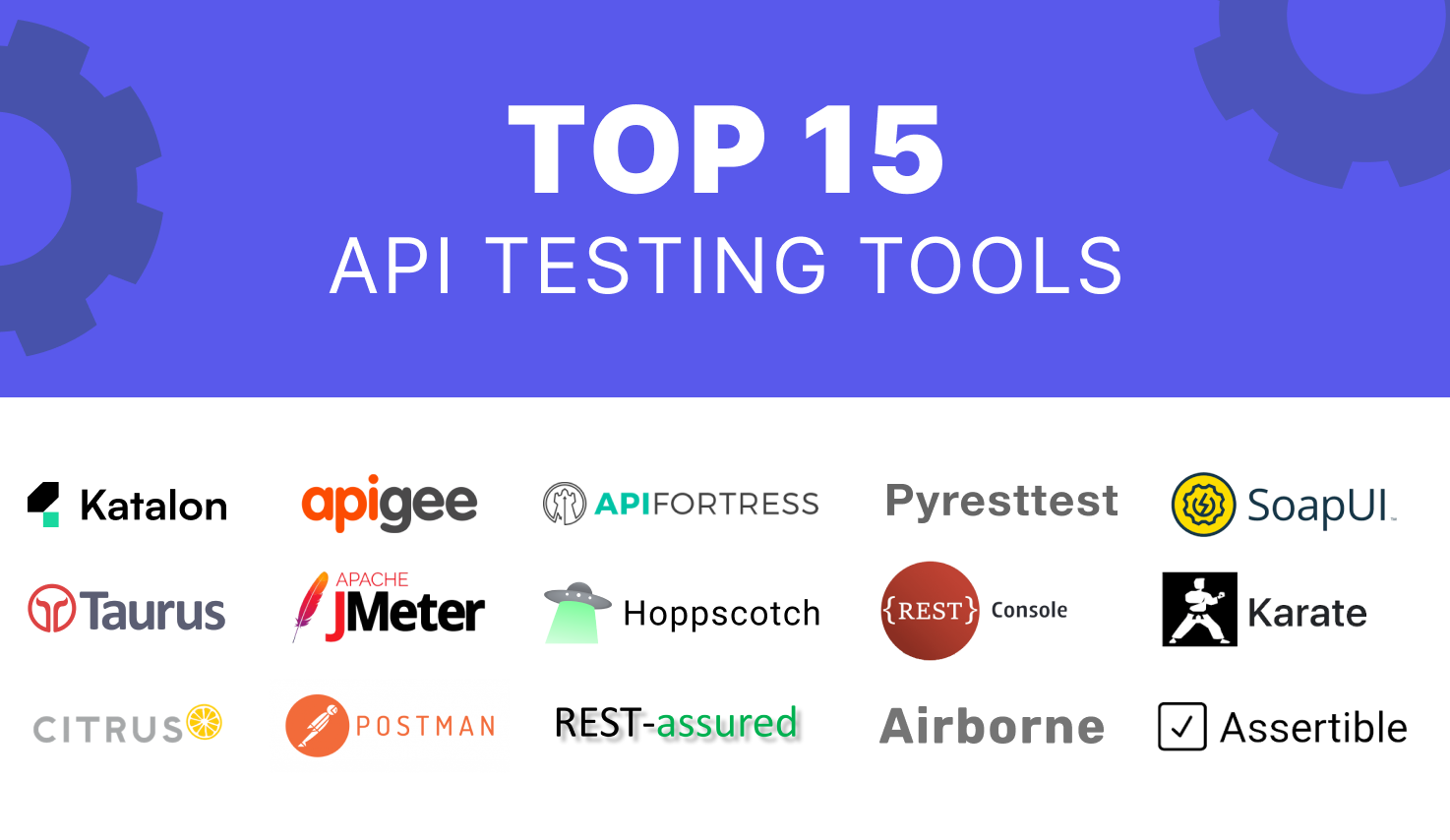
Each balances ease of use, growth potential, and features differently. The market has veterans like Postman and SoapUI, and fresh players like Karate DSL and Katalon Studio. Big enterprise tools like Tosca Testsuite, Apigee, and ReadyAPI bring deep integrations and analytics for complex setups.
Nailing these tools gives a competitive edge by speeding innovation while guarding quality across messy distributed systems (in most cases). Grasping how these tools back microservices matters—it drives how fast teams develop, how stable products stay, and how tough operations become.
This info guides teams in spending wisely and picking tools that fit their tech stack and budget. To understand tool behavior under heavy use and complex microservices, detailed pricing and performance data is key. Some tools provide advanced scripting capabilities but charge high license fees, while others offer free tiers that restrict concurrency and features.
Automated API testing moves beyond simple request and response checks. Microservices don’t just shift architecture—they reshape testing. It validates orchestration, tests contracts, and watches for real-time failures in inter-service talks (in practice). It lets teams push updates continuously, confident they won’t break chains.
SoapUI Capabilities and Use Cases in Microservices
Scalability benchmarks reveal how well tools manage REST, SOAP, and gRPC protocols and handle test data across multiple microservices simultaneously. Customer stories and real-life case studies of these tools in microservices help uncover good tactics and common traps. This knowledge helps leaders avoid wasting money on needless features or missing critical testing.
In short, automated testing meets microservices’ demands for quick feedback, wide coverage, and safety nets. Choosing the right tools mixes science and art—balancing tech fit, team skills, and budget choices. The next parts cover pricing, features, and case studies of top contenders for 2026, giving you solid insights into this fast-moving tech space.
For detailed technical standards behind this testing method, look to docs from top groups like the OpenAPI Initiative and OWASP API Security Project. They provide clear rules, proven methods, and security tips for APIs. These resources root automated API testing tools firmly in software quality and security. API Security Proven methods by OWASP.
Assessing Strengths, Limitations, and Best Fit Scenarios
Automated API testing tools for microservices come in a scatter of features and prices. Organizations often guess if the initial cost justifies itself over time. Postman is popular, thanks to its intuitive interface. It ranges from free to enterprise pricing tiers. Teams appreciate how quickly they can onboard and collaborate (generally). Its pricing isn’t always transparent.
SoapUI supports both SOAP and REST solidly. It suits microservices that lean on legacy web services. The tool feels tough but powerful, with reusable scripts that improve functional testing. However, if your team lacks dedicated API experts, expect a steep learning curve. Companies with complex requirements and skilled testers tend to gravitate toward SoapUI.
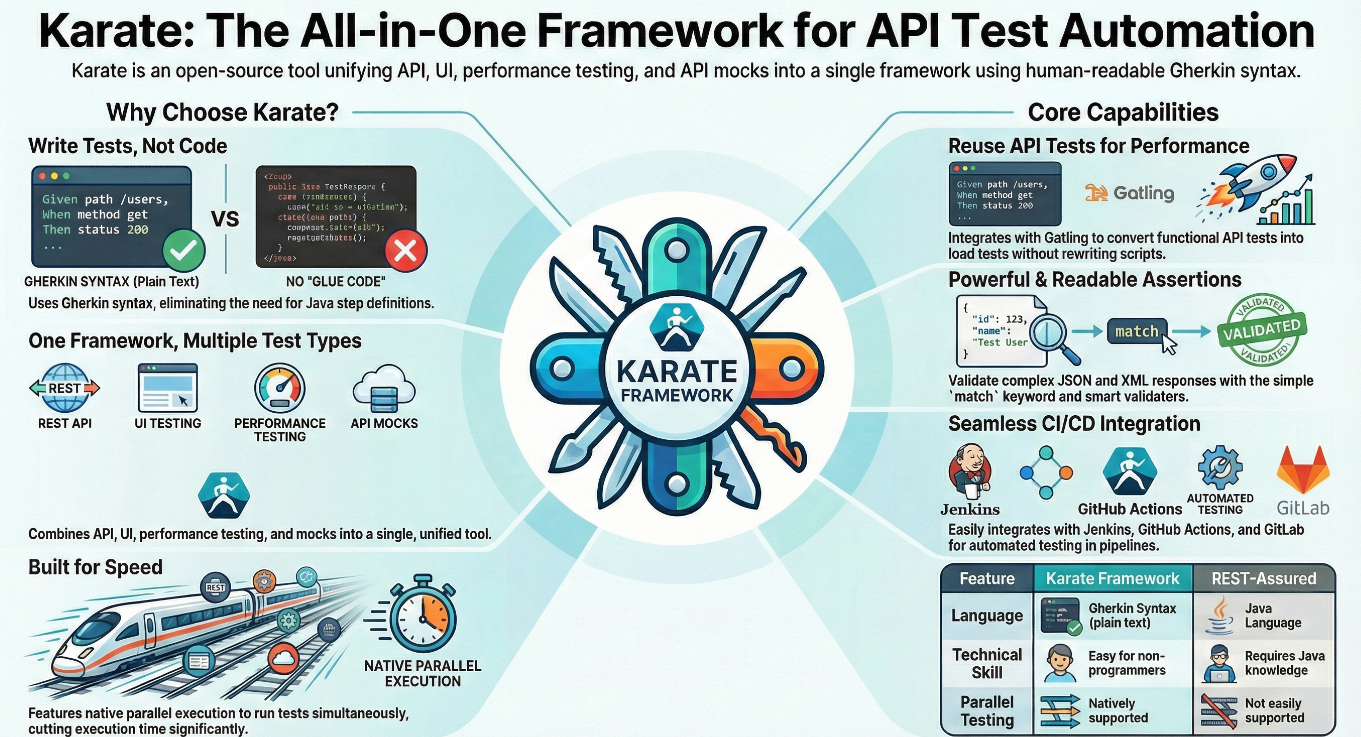
Karate DSL wears two hats: it’s both a testing framework and a domain-specific language crafted for API automation. Its simplified test scripts speed up builds and executions, ideal for microservices needing rapid updates and continuous integration. Its community is still young and thin, so unusual edge cases can snarl teams sometimes.
It offers pinpoint, customized testing but can overwhelm those wanting an all-in-one, ready-made solution. RestAssured is a Java-based framework custom for developers who prefer crafting tests manually. It sacrifices ease for granular technical control.
Pricing moves from free to premium. Katalon Studio mixes visual design with scripting in one environment. It fits teams that want quick starts but room to tweak later. Some report slow performance with large test collections—worth trialing if scale matters.
Writing Tests with Karate DSL for Microservices APIs
Tosca Testsuite uses model-driven testing so business analysts and testers with little coding can create tests swiftly. The price tag leans high, often pricing out smaller groups. But it bundles API and UI tests, giving process-focused enterprises strong bang for the buck.
Large organizations managing extensive cloud microservices see the most benefit. Apigee is more than a testing tool—it’s a full-fledged API manager with rich analytics and policy controls. Smaller teams or simpler projects might find it overly complex.
ReadyAPI combines SoapUI’s features into one paid suite for automation and performance testing. Detailed reports and wide protocol support make it fitting for large companies needing deep analysis. The steep cost, though, puts it beyond reach for modest operations.
When choosing a microservices API testing tool, consider:
- Your team’s coding skills versus preference for GUI.
- Budget constraints, covering licensing and expected automation ROI.
- Protocols involved—REST, SOAP, gRPC, or others.
- Compatibility with your CI/CD pipelines and cloud environment.
- Scale of testing: number of tests and execution frequency.
- Reporting and analytics required for debugging and compliance.
- Strength of community and vendor support for rapid troubleshooting.
Large enterprises with complex APIs typically go with SoapUI, ReadyAPI, or Apigee. Tosca Testsuite fits scenarios where business users drive test case creation. Startups and small teams often pick Postman or Katalon Studio. Developer-centric teams favor Karate DSL or RestAssured to code their tests.
RestAssured for Simplified API Automation

Picking the right tool means aligning its features with your project’s actual needs. Don’t pay for bells and whistles you won’t use. Nor grab software missing critical integrations. Combining transparent pricing with hands-on trials is key.
As microservices grow bigger and more tangled, standards shift continually. Regular reviews of your testing approach stop fragile suites and protect API quality. This balanced push also matches official API security guidelines from the National Cyber Security Centre here.
Clarifying Key Points on API Testing Tools for Microservices Architecture
Understanding the Pricing Models of Leading Tools
Postman’s free plan covers 1,000 API calls each month. It lets small teams try basic collaboration. The Professional tier costs $15 per user, monthly. Enterprise pricing? It’s a case-by-case quote. SoapUI and ReadyAPI charge yearly fees—about $749 and $849 per user. They cut prices for bulk licenses. Katalon Studio offers a free trial but hits $759 a year for Enterprise access. These prices fit startups testing early APIs and big firms juggling complex tasks.
Recognizing Performance in Microservices API Environments
SoapUI excels at load testing. It handles tricky microservices with asynchronous calls and keeps delays tiny. Karate DSL speeds test writing with short BDD-style scripts, slotting into CI/CD pipelines easily. RestAssured runs steady and targets Java developers but demands real coding chops. ReadyAPI blends UI and API testing, throwing out dense reports. Yet, in fragmented microservices, it can bog down resources seriously. Resource hog.
Assessing Real-World Application through Case Studies
Financial companies chopped manual testing in half using Postman’s API validation. A global retailer monitored dozens of microservices continuously with SoapUI, finding bugs way earlier. Healthcare teams using Karate DSL rely on reusable mocks to push releases faster. Katalon Studio’s visual test flows smoothed automation for squads moving off manual checks.
Comparing Money-Back Guarantees and Customer Support
Most vendors—Postman, Katalon Studio included—offer 30-day money-back guarantees to test if their tools suit your microservices. Enterprise buyers typically get dedicated support and service-level agreements. Free or cheap plans mostly lean on community forums and documentation. Apigee and Tosca Testsuite stand out with customer success programs, helping teams integrate and tweak tools deep in complex microservice webs.
Identifying Core Features That Differentiate Each Tool
Postman shines with a clean interface and workflows built for collaboration—ideal for teams blending dev and QA tasks. SoapUI and ReadyAPI focus on functional and load testing with flexible scripting options. Karate DSL uses Gherkin syntax for low-code tests, cutting test cycles. Apigee layers in API management and security, key when microservices face external traffic. Tosca Testsuite delivers model-based testing at enterprise scale, with change impact analysis across connected services.
These points cut through the noise around automated API testing tools for microservices. They link price, performance, customer support, and case results—helping teams pick the right fit. For a wider DevOps view, including infrastructure automation, see the best open source devops automation tools. Mastering API testing? The SoapUI official documentation is still a must-read.