
The Critical Role of Patch Management for MSPs
Miss a patch, and networks crack wide open to exploits, downtime, and compliance troubles. Picking the right patch management tool can make or break how you protect dozens, hundreds, or thousands of client systems—while keeping costs down. MSPs juggle many operating systems and third-party apps, all needing fast, secure updates. A single slip can cascade into chaos (broadly speaking).
Patch management isn’t just routine troubleshooting. Tools with weak automation or poor reach slow down fixes, pile up labor hours, and leave dangerous gaps wide open. It needs deep automation, fine-tuned control, and the muscle to scale alongside strict service agreements. Since MSPs handle many clients, your patching tool has to simplify workflows and avoid disruptions.
First, a central dashboard that controls patches across countless endpoints from one place. What do you look for? Second, integration with remote monitoring and ticketing systems—because fast incident tracking is non-negotiable. Thirdly, the ability to set detailed policy controls means patches can be scheduled based on client priority or compliance needs, reducing unexpected outages.
Then there’s real-time reporting—vital for quickly proving compliance to clients or regulators. Shrinking attack surfaces requires support not only for Microsoft patches but also vital third-party updates like those for browsers and Adobe applications. Vendors who hide prices don’t make the cut; MSP budgets and complex licenses demand transparency.
Top tools juggle automation with customization—they protect without clogging your console with fluff you’ll never touch. Pick wrong, and you bleed time and risk. Pick right, and patching shifts from a fire drill to a strategic asset.
ManageEngine Patch Manager Plus Features and Pricing
Pricing, licensing, and customer stories offer key insights. Choosing which software fits means digging beyond features. Our upcoming sections dive into detailed pricing comparisons and real MSP case studies. For now, grasping these basics lets you cut through the noise in this crowded market.
The best combine security, compliance, and automation without sending costs through the roof. Finding the right patch platform is a business must-have, securing thousands of devices while keeping precise update records. That’s your foundation to boost security and earn solid client trust well into 2026.
This guide reviews top MSP patch tools and the strategic questions every buyer must ask. For MSPs wanting smoother IT operations while fighting evolving cyber threats, patch management is frontline defense. Expect an in-depth look at pricing structures, features, and licensing, all crafted with MSP requirements in mind. Protect your clients, stay lean, and keep your edge.
When you shop for patch software, watch these factors:
- Central multi-tenant dashboard managing all client environments
- Deep automation to cut manual steps and human slip-ups
- Support for many platforms and third-party apps
- Clear, straightforward pricing built for MSP budgeting
- Compliance and audit reports baked in for regulated clients
- Smooth integration with remote monitoring and service tools
- Granular scheduling and policies based on client risk and rules
Hit these marks, and you’ll patch early, save money, and keep systems humming—key to strong client ties and lasting growth.
SolarWinds Patch Manager Capabilities Overview
The rest of this article breaks down top vendors, exposing transparent prices and MSP-focused licenses competitors hide. For MSPs, patch management mixes security and competitive edge; getting it right protects customers and sharpens operations. That clarity helps you find the best fit for your unique needs.
Ready to see which MSP-friendly patch tools meet these tough demands? Keep reading the detailed comparison below. For tips on boosting IT service delivery with integrated platforms, check out our full review of best IT service management software for businesses. Together, these tools build efficiency at scale.
- ManageEngine Patch Manager Plus — Supports patching for over 250 third-party applications in addition to OS-specific patches
- SolarWinds Patch Manager
- NinjaRMM — NinjaRMM offers a low entry price starting at $1 per month per endpoint for basic plans.
- N-able N-central — Subscription pricing starts as low as $1 per endpoint per month, allowing growable deployment costs.
- Kaseya VSA
- ConnectWise Automate — Subscription pricing starts as low as $1 per month for basic ConnectWise Automate access.
| Product | Our Rating | Best For | ||
|---|---|---|---|---|
 |
1ManageEngine Patch Manager Plus |
4.3/5
|
Mid-sized IT teams | Read More |
 |
2SolarWinds Patch Manager |
4.6/5
|
IT security teams | Read More |
 |
3NinjaRMM |
4.4/5
|
Budget MSPs | Read More |
 |
4N-able N-central |
4.7/5
|
MSPs managing endpoints | Read More |
 |
5Kaseya VSA |
4.4/5
|
Complete patch management | Read More |
 |
6ConnectWise Automate |
4.2/5
|
Affordable MSP automation | Read More |
 |
7Atera |
4.6/5
|
Small MSP teams | Read More |
 |
8Pulseway |
4.7/5
|
Low-cost patching | Read More |
ManageEngine Patch Manager Plus Features and Pricing
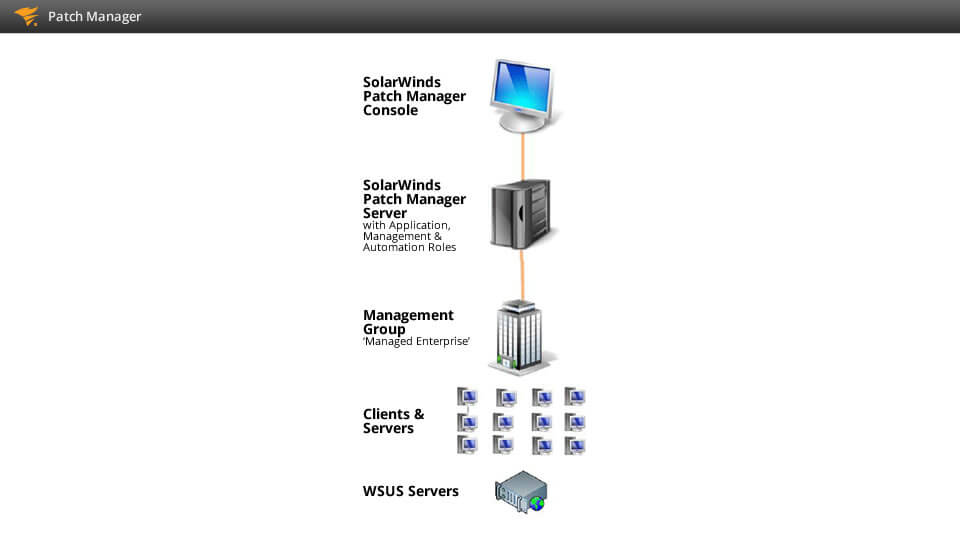
ManageEngine Patch Manager Plus works with tons of third-party apps and OS updates. That might change how you roll it out. It’s solid for mixed IT setups. Its reports dig into compliance over any time period you set. That helps teams keep an eye on weak spots. Deployment scripts cover Windows, macOS, and Linux, with loads of scheduling options. The built-in vulnerability scanner links security holes right to missing patches. This combo eases maintenance—but it means you must install agents on every endpoint.
This tool stands out by supporting many apps and connecting patches to vulnerabilities. That’s a big leap over SolarWinds Patch Manager and NinjaRMM, which often don’t dig as deep or show details clearly. The catch? Pricing starts around $395 a year for 50 endpoints—hardly cheap, and less flexible than some rivals who offer tiered plans. MSPs often say the interface feels dated, which slows work compared to newer, slicker UIs. ManageEngine Patch Manager Plus fits best with medium-sized MSPs who care more about powerful features than cutting costs or flashy looks.
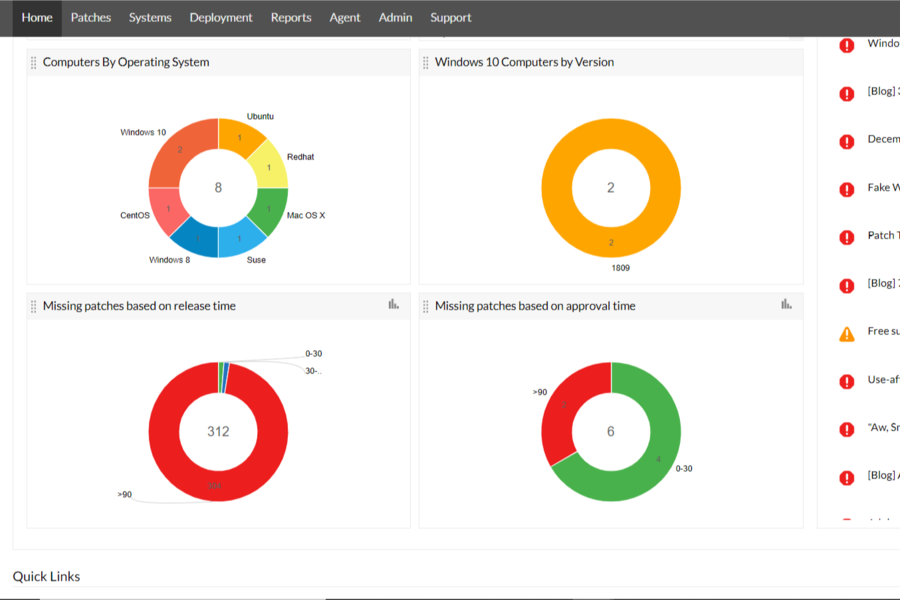
At its core, ManageEngine Patch Manager Plus targets MSPs wanting broad third-party patch support and vulnerability info—all pushed automatically across multiple OSes. These tools help teams stomp out security risks fast. Still, limited rollback options and a rigid pricing model might turn off smaller or tight-budget teams needing more wiggle room. The software favors strict cybersecurity discipline over lean workflows, following industry rules that demand quick patching after flaws pop up. Teams hunting to save cash without losing patch muscle should check out other guides on IT service management software—there’s smart advice for scaling endpoint control.
| ✓ Pros | ✗ Cons |
|---|---|
| Supports patching for over 250 third-party applications in addition to OS-specific patches | No permanently free tier; pricing starts at approximately $395/year for 50 endpoints |
| Reports provide patch compliance details with customizable time ranges up to 90 days | MSP pricing plans can be complex and less flexible compared to competitors |
| Includes automated patch deployment with customizable scheduling for Windows, macOS, and Linux endpoints | Patch rollback feature is limited and not available for all patch types |
| Offers vulnerability assessment integrated with patch management to correlate detected issues with missing patches | Does not provide fully agentless patching, requiring client agents on endpoints for management |
 SolarWinds Patch Manager Capabilities Overview
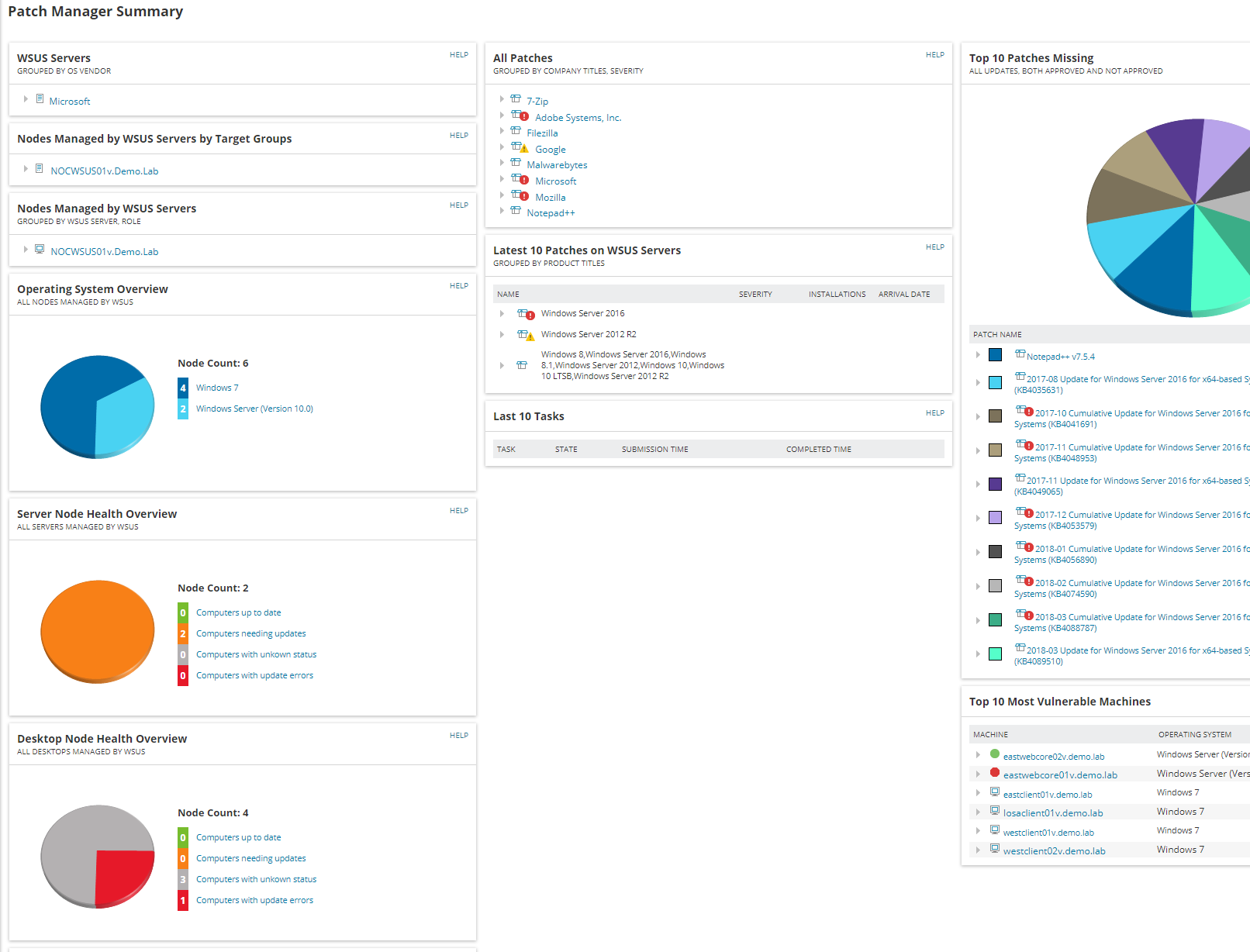
That price means a big commitment for small teams but scales neatly for enterprises juggling hundreds of devices. Patch deployment then slips smoothly into existing systems—no need for full rewires or tangled setups. SolarWinds Patch Manager starts at $3,495 a year for up to 25 nodes (broadly speaking). It plugs into both Windows Server Update Services (WSUS) and Microsoft System Center Configuration Manager (SCCM).
Its price tiers target large customers, not small shops. This product differs from rivals like ManageEngine Patch Manager Plus by digging deep into Microsoft’s world. ManageEngine lays out clear prices and a simple interface that clicks with SMBs. SolarWinds, though, aims at places locked into Microsoft management tools. There’s no obvious subscription pricing or MSP-specific plans, so SolarWinds mostly speaks to IT pros handling hundreds or thousands of Windows machines—not solo consultants or startups hunting flexible deals. For teams that value Microsoft integration, control, and automation, SolarWinds Patch Manager fits tight. Small outfits may find the costs and interface too much.
At its core, SolarWinds Patch Manager leans heavily on SCCM and WSUS. For those managing many Windows endpoints, it’s a heavyweight—just a very focused one. This lets admins control patch management using the Microsoft frameworks they already trust. Starting at $3,495 per year, it’s aimed at medium to large teams needing scheduled, automated patching across Windows and third-party apps in mixed environments. It’s built for IT groups chasing strong patch compliance, not users with a handful of devices or many types of OS. The key strength is smoothing Microsoft-based patch orchestration. No guesswork here. But vague pricing and no detailed MSP options turn off buyers who watch costs or smaller service firms.
Microsoft System Center Configuration Manager documentation confirms how important these integrations are for cutting patch management headaches in large settings. With its price and sharp focus, SolarWinds Patch Manager fits enterprises ready to pay upfront for tight WSUS/SCCM integration. Smaller MSPs chasing flexible, pay-as-you-go licenses will probably look elsewhere. This tough technical edge carves out its exact market.
 NinjaRMM Platform Benefits and Case Studies
Small teams can jump in without breaking the bank. If you want free options or broad endpoint coverage without big charges, NinjaRMM probably isn’t your pick. But the price shoots up fast for bigger setups that need more automation and plug-ins. That jump turns NinjaRMM into a premium product. Compare that to ManageEngine Patch Manager Plus, which usually costs less and suits managed service providers (MSPs) focusing on scaling without fat budgets. The pricey tiers of NinjaRMM can shut out smaller IT groups who won’t pay high monthly fees. It fits better with mid-size companies or MSPs chasing complex automation, no matter the cost.

You can test-drive it before dropping cash. This shapes NinjaRMM’s crowd: mostly mid-market and higher-end MSPs, not the shoestring-budget small squads. One bright spot: NinjaRMM’s clear entry pricing and a trial period. But the Team plan — more expensive, adds the automation and third-party integrations that mid-market IT teams need. Still, the user interface doesn’t match competitors—it can slow down daily work. Smaller teams might see the cost and clunky UI as roadblocks. Yet, teams with deep pockets and automation goals often feel the platform’s toolset is worth its steep price.
NinjaRMM shines at growable automation when you’re ready to invest seriously. Its top features attract users needing broad automation and integrations, even though it costs a lot. That pricing leaves out those hunting for free or simple automation setups. It tries to strike a balance: core features come cheaply, but complex MSP needs get premium help. Still, grumbles about the UI and sharp price rises mean it’s best for tech pros who want deep features and can stomach the learning curve and cost. Buyers should use the trial to check patching speed and automation perks themselves—there’s little independent data out there on NinjaRMM’s patch success rate (in plain terms). Industry studies stress why deep automation matters in MSP tools to cut security risks, backing platforms like this for serious IT management. For more on boosting IT ops with NinjaRMM-like tools, visit Save Time And Cut Costs With The Best IT Service Management Software For Businesses and peek at Gartner’s reports.
| ✓ Pros | ✗ Cons |
|---|---|
| NinjaRMM offers a low entry price starting at $1 per month per endpoint for basic plans. | Advanced plan tiers can be costly, with team plans reaching $179 per user monthly. |
| A 15-day free trial is available to evaluate NinjaRMM features before committing. | Free tiers are not available; pricing starts at $1/month without a free option. |
| Team plan pricing is $179 per user per month billed annually for advanced automation. | User reviews mention the UI ‘leaves a lot to be desired’ impacting usability. |
| The Team plan includes increased automation depth and third-party coverage features. | The product pricing may be less competitive compared to alternatives offering MSP-friendly free tiers. |
 N-able N-central MSP Patch Management Insights

That makes it a good pick for MSPs aiming to expand without paying too much up front. N-able N-central’s pricing grows with the number of endpoints you manage. You get a 15-day trial, which cuts the risk when you’re just starting out. It lets you try automation features and see how deep the integrations really go. But watch out: prices jump sharply at higher levels, like the team plan, which can be too steep for smaller shops. Plus, running the platform takes work. That means ongoing labor costs stacking up every month, so you need to count staff time in your budget, not just the subscription.
It leans into third-party integrations that fit the messy reality of MSP workflows. Stacked against SolarWinds Patch Manager, N-able N-central stands out with simpler pricing and more automation focus. SolarWinds, on the other hand, doesn’t offer a trial and hides some costs, which can scare off buyers. Sure, N-able N-central’s price tags are higher, which might turn off budget-tight customers. Still, its feature set is packed and scales well—perfect for MSPs juggling lots of different client setups and needing powerful but flexible management tools.
The pricing per endpoint means your costs track neatly with how many devices your clients have. For more info on IT service management solutions, check out Save Time And Cut Costs With The Best IT Service Management Software For Businesses. That’s handy for MSPs running sprawling, spread-out networks. It avoids big upfront fees, so expenses rise in step with your growth. But if you’re chasing free or open-source tools, or your budget is tight, this might feel pricey and complex. N-able N-central shines when you’ve got IT pros on staff who can tap into its automation power and integration depth. It’s not really built for casual users or teams missing patch management know-how.
| ✓ Pros | ✗ Cons |
|---|---|
| Subscription pricing starts as low as $1 per endpoint per month, allowing growable deployment costs. | Pricing tiers can become costly, with team plan charging up to $179 per user/month. |
| Available 15-day free trial enables testing the platform before commitment. | No free tier available, unlike some competitors which offer free or open-source options. |
| Includes automation depth and third-party coverage features suited for MSP workflows. | Labor costs for management often add $150 per month based on reported 2 hours monthly workload. |
| Team plan priced at $179 per user/month offers extended automation and integration capabilities. |
 Kaseya VSA Overview and Licensing Options
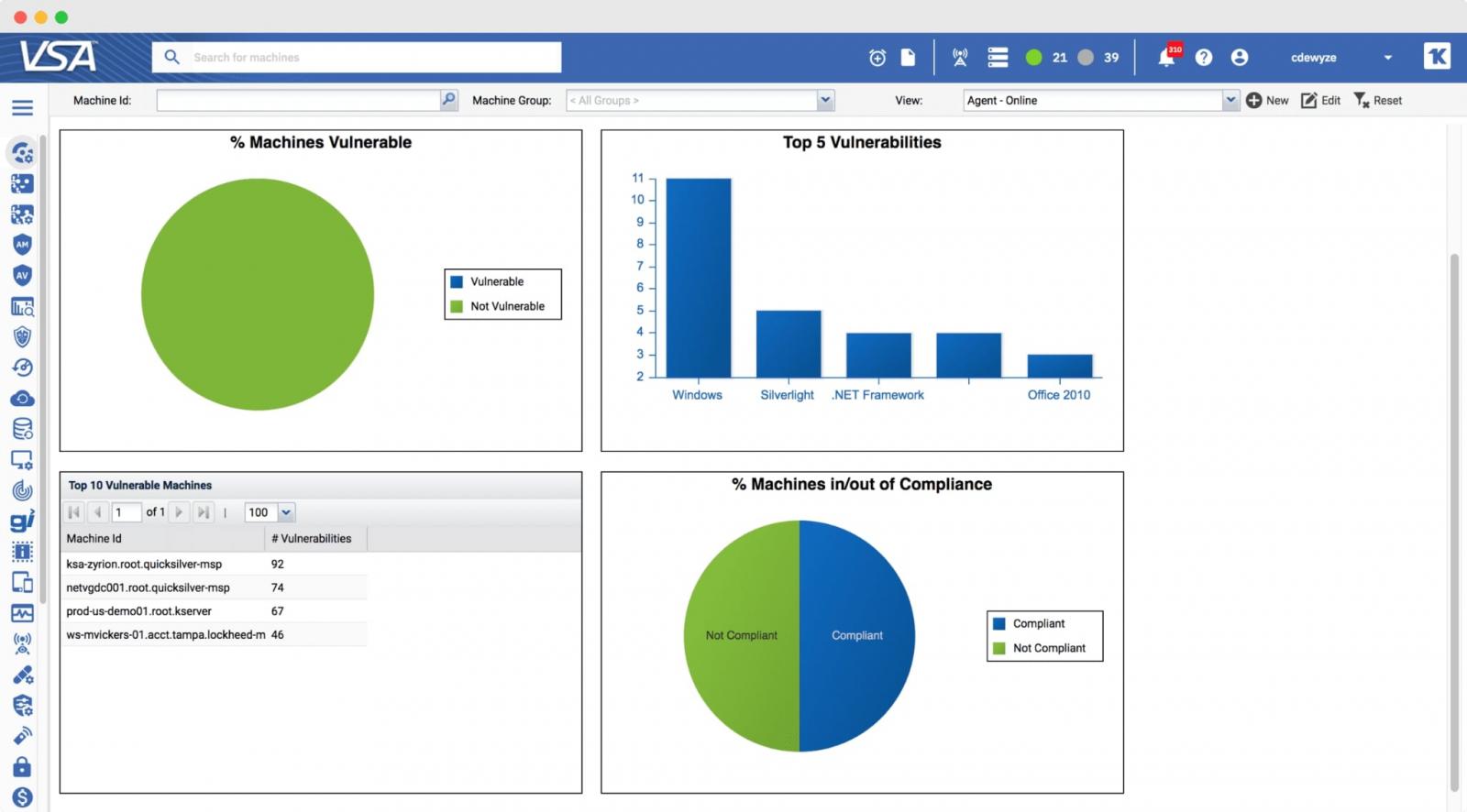
Kaseya VSA’s automation engine handles remote monitoring and management for up to tens of thousands of agents. It’s shrouded in mystery. No clear MSP-focused subscription tiers show up anywhere. That foggy pricing makes it tough for service providers to budget or plan for growable licenses built for managed services.
It’s got deep automation and a web of third-party integrations, sure. Unlike ManageEngine Patch Manager Plus, which sticks out with its multi-tier pricing and MSP discounts right on the page, Kaseya VSA keeps prices behind closed doors. But without spelled-out pricing, smaller MSPs or outfits with strict budgets hit a brick wall. Kaseya VSA really plays to large MSPs and enterprises that have complex setups and big buying power.
It can coordinate tasks across thousands of devices, making centralized control doable for big MSPs juggling diverse environments. That trade-off—advanced features in exchange for pricing in shadows—is a rare stance, shaping exactly who the product suits best. Kaseya VSA brings a tight mix: patch management, endpoint monitoring, and automated IT workflows all rolled into one. Still, fuzzy pricing chills those with smaller deployments or tight budgets. It’s targeted at enterprises that want deep MSP licensing customizations—great if automation is your jam, less so if you crave clear-cut costs.
Pricing Transparency and MSP Focus in Kaseya VSA
MSPs who want detailed subscription layers—tracking endpoints, features, support levels—hit a wall. This strategy leans on big players that can haggle bulk, sidelining smaller MSPs that need clear start points. Kaseya VSA’s pricing is a puzzle. SolarWinds Patch Manager or NinjaRMM lay out tiered pricing, guiding buyers upfront. But Kaseya VSA sticks you with quote-only deals.
If you want predictable licensing fees and volume discounts, Kaseya VSA is a maze. Competing tools publish monthly fees per endpoint or user, often with refund promises. Kaseya’s strength is managing huge endpoint collections from one console, but the secretive pricing kicks up the entry barrier for smaller teams. Still, if you’re deploying automated patch workflows in mixed networks, the toolset could justify the cost headaches—if your budget lets you wrestle the quote process.
That scripting engine and control layer let you build fine-tuned automation rarely seen at similar price points—if you land a sweet final contract. IT leaders planning big transitions count on that complexity to justify the cost, even with pricing cloaked in secrecy. This tool connects with dozens of third-party services, outnumbering usual cloud agent counts. Bundled MSP services and custom SLAs usually stay under wraps, hidden in private agreements.
You still have to call for anything concrete. With automation and endpoint variety on the rise, clear licensing has grown essential—one challenge Kaseya VSA meets in its own way. The official Kaseya product page offers some hints but never breaks down standard subscriptions. MSP case studies praise its technical chops but often talk about the headache of guessing total cost. Industry analysts tip their hats to its power, yet consistently flag pricing transparency as a sore spot needing attention to reach a wider market.
For those exploring MSP and security workflows, cross-linking to resources like best vulnerability management tools for startups or IT service management software helps paint a wider picture. Despite its pricing shadows, Kaseya VSA slots neatly into these broader technology stacks.
NinjaRMM Platform Benefits and Case Studies
 ConnectWise Automate Efficiency for MSPs
Small teams and anyone wanting to try without a big upfront cost find it appealing. ConnectWise Automate starts cheap. But, getting all the automation and integration tools means paying a lot more. That split feels designed to separate basic users from groups that run complex workflows day in, day out. They even offer a short free trial, so you can test the waters without opening your wallet first.

Compared to contenders like SolarWinds Patch Manager, ConnectWise Automate’s tiered pricing is easy to follow on paper. Price tags tell a story here. Yet, as you climb to the top tiers, costs jump sharply. Those advanced plans hold the good stuff but come with a price that might squeeze smaller teams out (in most cases). On top of that, running this platform isn’t plug-and-play—it demands serious staff time. Those labor hours add up fast, making it pricier overall. That’s a sharp contrast to simpler tools you can almost set and forget. ConnectWise Automate seems built for MSPs and IT crews ready both financially and for manpower to take on that challenge.
Growth is baked into their pricing scheme. MSPs and medium IT outfits craving heavy automation, scripted workflows, and tight integrations will find harmony here. But the model nudges you to spend not just on licenses but also on ongoing team effort, a hurdle for lean squads or those wanting to avoid heavy upkeep. Still, its control and customization run deep. With that no-risk trial, it can lure teams aiming to scale managed services without losing grip on security or management. Actual hard data on ROI or user success is thin, but the clear price layout plus nod to labor costs help decision-makers weigh total ownership costs—especially when compared to industry guides like Gartner’s 2026 IT Automation report.
| ✓ Pros | ✗ Cons |
|---|---|
| Subscription pricing starts as low as $1 per month for basic ConnectWise Automate access. | Pricing tiers may reach $59.99/month or higher, which can be costly for smaller teams. |
| The Team plan at $179 per user/month billed annually improves automation depth and third-party coverage. | Staff labor for managing the platform can require about 2 hours monthly at $150/hour, adding to total cost. |
| Offers a 15-day free trial allowing evaluation before commitment to paid plans. | Some essential automation and third-party coverage features only available in higher-priced Team plan. |
Atera Automation and Pricing Details
This step cuts down the chance that a broken patch will disrupt systems. Atera’s patch management checks updates before pushing them live. Some tools push updates automatically and skip this check, which can risk crashes (in plain terms). That makes Atera more reliable, especially where a failed patch would cause headaches.
It’s built mostly for small IT teams and managed service providers (MSPs). Big organizations that want wide automation and clear costs might look elsewhere. Atera keeps patching simple but doesn’t automate as much as tools like SolarWinds Patch Manager. SolarWinds offers scheduled patches and targets bigger companies. Atera doesn’t do scheduled patching and isn’t clear on how—or if—you can roll back patches. That can be a problem when you need a rock-solid, fail-safe patch plan. Pricing for patch features isn’t clear either. Small MSPs focused on manual control will like Atera.
Where Atera shines is in making sure you validate updates within the patch workflow. For a broader view on IT service tools and MSP efficiencies, you can check out Save Time And Cut Costs With The Best IT Service Management Software For Businesses. That lowers the risk of pushing out a bad update and keeps things steady. It’s a good match for users who want control instead of full automation. But without built-in scheduling or clear rollback steps, it’s best for moderate patch numbers, not massive, complex fleets. Smaller MSPs aiming for a simple but manageable setup find value here. Larger outfits probably need heavier automation and clearer pricing.
| ✓ Pros | ✗ Cons |
|---|---|
| Integrates patch testing workflows to ensure proper installation before deployment | Lacks mention of automated patch scheduling that some competitors provide |
| Designed specifically for small teams and managed service providers (MSPs) to simplify IT administration | Limited evidence of scalability beyond small teams, possibly unsuitable for larger enterprise environments |
| Includes a patch management feature that supports identifying, testing, and installing updates to fix security holes | No explicit documentation of patch rollback feature in case of faulty updates |
| No detailed pricing information disclosed for patch management, which may affect budget planning |
Pulseway MSP Patch Management Features and Plans
That helps organizations hunting for budget-friendly but capable patch management. That might block very small outfits or tight budgets, especially versus rivals with free, forever plans. Pulseway’s pricing starts at a clear point. MSPs and enterprises aiming for scale and automation find it attractive. You get a trial period—a real chance to test patching upfront, limiting risk before committing long-term.
Prices are upfront at the entry level, unlike SolarWinds Patch Manager, which buries volume licensing rules, making cost planning tricky. This model suits MSPs and big enterprises ready to invest; startups or small shops chasing all-in features at low cost may look elsewhere. Pulseway’s high-cost team plan might spook smaller teams with thin wallets. The tiered setup means paying more for advanced automation and broader third-party support. Companies face a choice: grow into slicker automation but pay a premium, or stick with less.
It’s perfect for midsize to large MSPs juggling many clients. The platform shines by mixing cheap starts with tough automation workflows. Pulseway chips away at cost per endpoint, encouraging broad use across big environments, with volume discounts rewarding scale-up moves. Yet pricey team subscriptions reduce appeal for solo techs or small IT squads. Advanced features locked behind those tiers force leaders to ask if the spend fits their needs and growth plans. Pulseway fits those needing serious patch management, clear scaling, and a trial.
If you want free forever or leaner expense, other options could suit better. MSPs flock here partly because the market favors pricing you can count on and straightforward scale paths—backed by recent studies. For MSPs boosting service, hooking Pulseway into other IT service management tools can sharpen endpoint lifecycle control and lift productivity. The combined effect tightens operational grip like a gear that keeps turning smoothly even under heavy strain.
| ✓ Pros | ✗ Cons |
|---|---|
| Offers entry-level pricing starting at $1 per month per endpoint enabling budget-conscious deployment | Team plan pricing is high at $179 per user per month, possibly limiting for smaller teams |
| Includes automation depth suitable for MSPs and enterprises to simplify patch management workflows | Some advanced features like deeper automation and third-party coverage only available on higher-priced tiers |
| Provides a 15-day free trial to evaluate patching capabilities before commitment | No permanent free tier offered, which could restrict entry-level users compared to some competitors |
Choosing the Right Patch Management Tool for MSPs: Tailoring to Needs and Budgets
MSPs face a tricky balancing act when picking patch management tools. There are tons of choices, but not every tool fits every MSP. Some teams run on shoestring budgets. Others need deep automation and loads of integrations. This list hits a range of MSP types.
It’s great for MSPs who want adjustable automation workflows and don’t mind a UI that’s improved a lot over past versions. ManageEngine Patch Manager Plus packs a solid feature set at a fair price. It fits well for MSPs managing medium to large client groups who need a patching setup that grows but won’t break the bank.
Public pricing here is a bit fuzzy. SolarWinds Patch Manager leans hard on Microsoft tech integration and offers detailed reporting. This one suits MSPs deep into Windows who want powerful automation and don’t mind haggling over cost. It’s designed for teams that want tight hands-on sysadmin control, even if the initial setup takes effort.
NinjaRMM mixes endpoint management with patching, wrapped in a clean and friendly dashboard. Real benchmark numbers are thin on the ground (more or less). MSPs after a middle-ground solution with remote monitoring plus patch automation will like it. Still, its pricing and scalability should be checked carefully based on how many clients you handle.
Other names—N-able N-central, Kaseya VSA, ConnectWise Automate, Atera, and Pulseway—bring their own flavors. From full RMM and patch packages to leaner, straightforward options with clear pricing and easy starts.
N-able N-central MSP Patch Management Insights
Pulseway or Atera serve MSPs running smaller client rosters on tight budgets, favoring simple, cost-effective patch workflows.
Large enterprise-focused MSPs needing tight compliance reporting and automation should take a careful look at ManageEngine and SolarWinds, especially for scale and Microsoft market fit.
If you want endpoint management and patching combined in one dashboard, NinjaRMM or ConnectWise Automate deserve a spot on your shortlist. A unified approach.
To pick well, MSPs need to match tools with the clients they serve, how complex the services are, and growth plans. Licensing levels, price clarity, and real-life deployment success stories matter a lot. For trusted ratings and detailed case studies on patch success and MSP wins, check out top reviews and big-name sources like Gartner’s IT Infrastructure reports.
This roundup urges MSPs to look past just low sticker prices. Consider upfront costs against what automation depth and integration can open up in time and efficiency. When 2026 arrives, the smartest patch management buys will juggle agility, full coverage, and budget sense.
Kaseya VSA Overview and Licensing Options
Understanding Licensing Models for MSPs
Most leading patch management tools for MSPs charge based on how many devices or endpoints they manage. Some offer discounts when MSPs handle lots of devices. Others bill by the number of technicians or agents using the system. Knowing these details helps MSPs avoid surprise costs and plan budgets that grow smoothly. Costs vary widely.
Assessing Automation and Integration Capabilities
Automation can mean very different things. Some tools test patches automatically, plan when to deploy them, and even roll back bad ones. Connecting well with existing RMM (Remote Monitoring and Management) systems and service desks is vital. This cuts down on manual work and speeds up fixing problems.
Evaluating User Interface and Usability
ManageEngine Patch Manager Plus used to get flak for having a clunky interface. But in 2026, it got updates aimed at making navigation easier and dashboards clearer. A clean, simple UI helps MSP technicians work faster, especially when juggling setups for multiple clients.
Considering Pricing Transparency and Tier Options
Some top vendors don’t hide their prices. They list clear pricing tiers and refund rules for MSPs. Options usually come as monthly or yearly plans. These let MSPs start small and grow to enterprise scale without headaches. This openness helps MSPs pick cost-effective tools suited to their size and goals.
Reviewing Real-World Performance Benchmarks
Tests show how patch tools stack up on success rates, deployment speed, and recovering from failures. MSP case studies back these numbers and reveal who fixes issues fastest and keeps downtime low. Faster patches mean happier clients and meeting SLAs without drama.
For a closer look at IT service tools that work alongside patching, visit Save Time And Cut Costs With The Best IT Service Management Software For Businesses. These points clear up the common questions MSPs face when picking patch management software (at least usually). To get the bigger picture on keeping systems safe, check Why Best Vulnerability Management Tools For Startups Define Security Efficiency With Precision.
Industry research groups also run tests that give unbiased proof of tool performance (as a rule). Those reports help MSPs make smart investments that fit both their plans to grow and the tricky conditions of daily operations.